Wednesday, April 22, 2020

Blog #19- Sonia Lyakhovich- Period 2- 4/20/20

Sonia Lyakhovich     04/20/20      #19     Sophomores 2020

Aim: How does “Chapter 7” (of Animal Farm) portray the psychology of memory and authority??

Do Now: THINK/PAIR/SHARE

What makes for a good leader? What qualities or attributes are associated with a good leader? Is there a point/degree in which a leader must forge ahead through their vision; despite the cost(s)? What cost is too great? How do you know?


Our class discussed what makes a good leader, some of the attributes we came up with were that a leader should be an individual and not a follower, should form their own opinion, they should also be smart, brave, charismatic, honest, have good morals, and maintain promises and discipline. However, the people who tend to come to power usually do not follow all of these characteristics. In my opinion, the main characteristic should be someone who can keep control of the people they are in charge of because without order, there is no structure in society.

In addition, our class discussed to what lengths a leader should go to when trying to achieve their goal. The conclusion most people came to was that even if there are some costs, a leader should be true to their word, to a certain degree. The point to which a leader should stop is when their actions go against the principles and morals of the society, going through with their promise puts people in danger or if the stability of the society will be compromised.

How was memory portrayed in Animal Farm?

In Animal Farm, memory is manipulated like in the example of the rules of the farm. The animals of the farm remember some rules and take what Napoleon says as a fact, so when he twists the rules to his liking, he convinces them that the rules have not changed. In addition, the way that Napoleon was able to twist the events of the battle in order to make Snowball appear as if he was working for the humans, by saying his fleeing was clearly a sign of how he tried to make the animals lose the fight.

Another example of how memory is portrayed is how the animals remember the symbols of the rebellion. Old Major, along with the song Beasts of England, serve as a reminder of the successful rebellion and what the animals were fighting for.

How about authority?

Authority is portrayed in Animal Farm through how the animals hold control. Mr. Jones used to have authority on the farm, until the animals rebelled and the pigs took control on the farm. Pigs are on a power trip, taking over the farm and using dogs to hold control. The reason that they can maintain authority is because they implement consequences for anyone who goes against Napoleon, as well as rewards for getting things done well. Incentives like greater rations, as well as building a mill, make the animals continue to follow authority.


Enrichment: Authority & Milgram Experiment

The point of the experiment was to find out why evil things occur such as the Holocaust. Deeds like these are almost unspeakable, so why did the majority obey? 

A fake experiment was set up with an experimenter, teacher(subject) and learner (actor). The person in charge of the experiment told the subject that they were testing how punishment and learning were related. The “learner” had to memorize word pairs and would be punished if they were wrong using shock. The "voltage of the shocks" (the actor would only pretend to be shocked) would increase with each one. The point of this was to see how far people would go. 65% of participants went up to the maximum shock, while all went up to 300V.

This raised the question when and do we obey? One explanation is that it is a survival advantage to work together. In the past when hierarchies formed, the brain underwent a shift in mindset. When people have this shift they no longer feel responsible for their actions and enter an agentic state. People enter the hierarchies of family, school, work because of punishment for not being a part of it, but also the rewards, like having a support group, learning new things, and getting paid. People in charge present appropriate demands, so u willingly accept the word of superiors. When this happens, you no longer feel responsible. Leaving such a hierarchy can be difficult because the brain wants consistency, and admitting one wrong deed done under the influence of authority will make you feel guilty for all of the deeds done.
CLASS DISCUSSION


What makes for a good leader?

  1. Authority- even if ur a bad leader your followers will follow you

  2. Confident- your followers will continue to trust you because of your confidence

For example, in Animal Farm, propaganda and manipulation of memory are used by Snowball. He uses the fear of Jones to come back as well as deception of events that occurred to keep his power.


Enrichment

How reliable is your memory? | Elizabeth Loftus

Can You Trust Your Memories?

Memories can often be altered in a person's mind. This happens every time time we call it up, it changes slightly. In the Lost in the Mall experiment,  a group of people were asked to talk about when they got lost in the mall and write about it every single day. These descriptions would change from day to day and some people, who have never been lost in a mall, created an entire story despite it never occurring. This shows how easily that memories can be manipulated. This can make it easy for someone who is trustworthy or in power to alter events that happened as you remember them. This can be seen in the way Napoleon in Animal Farm is able to turn the animals against Snowball and have them believe lies which he came up with. 

Reflection: 

I learned that people in power can use manipulation of memory to keep their control and that we as people tend to follow authority, for the greater good, or evil. These concepts can be applied to politics, such as how the government keeps their authority and how we should be careful and pay attention to the manipulation of memories by the government. In addition, it could also be applied to our daily lives, such as people in power like doctors, teachers, and parents as they too do have authority over us. It is important to learn about this so that we do not just blindly follow what we are told and so that we can better understand why people can so easily take control. I will use this knowledge in my daily life in order to make sure my actions are for good instead of evil.

Identify a character which is using memory and authority to their advantage and explain how it’s being used to their advantage.

In Animal Farm, Napoleon uses memory and authority in order to secure his power. He is able to install fear in the animals on the farm with the help of his dogs. They make sure everything is running the way he wants to and kill those who defy or rebel against him. In addition, he is able to manipulate memories to his own benefit. For example, when he told the animals that the law was that animals can not sleep in a bed with sheets, therefore he can sleep comfortably in a bed without sheets. Another example is when he sets the animals against Snowball by saying he was working with Mr. Jones all along, and makes them believe Snowball was trying to make the battle fail. This way Napoleon was able to take control of the animals on the farm and ensure that his power would not be taken away from him. 


Links from the Lesson:

The Milgram Shock Experiment—Khan Academy

Why Do We Obey Authority? - The Milgram Experiments

How reliable is your memory? | Elizabeth Loftus

Can You Trust Your Memories?

Can You Trust Your Memory?


Life in a Pandemic

Living in the middle of an epidemic is very new and difficult. Being a teen, makes you feel like you are missing out on so many experiences that other people got to have when they were my age. In addition, we are isolated from our friends and loved ones, other than those that live in our house, many of whom we rely on to keep us motivated and use as our support system. I have been trying to destress and keep myself on track.

Working and learning from home has been very strange. On one hand, I get to learn at my own speed and use what works best for me other than class lectures, but on the other hand there is a lot of work to get done because that is the way our teachers check to see if we are doing it. Keeping up with work loads is hard, but after a while it gets easier and more automatic


Sonia’s Quarantine Tips:

  1. Look for a new hobby (ex. Art, Cooking, Reading, Crafting, etc.)

  2. Relax, take some time for yourself, it’s a stressful time

  3. Reach out to loved ones, it can help you feel less isolated

  4. Breathe, it gets better

Blog #19 - Angie Mohamed - Period 9 - 4/22/2020

Blog #19
Angie Mohamed 
Period 9
April 22, 2020

Aim: 
-How is Stalin’s failed Five-Year-Plan illustrated through the symbolism of the windmill?
-How is the psychology of memory and authority portrayed in Chapter 7 of Animal Farm?
-How does the author’s use of language reveal historical relevance?

Answers to Aim (In addition to my class notes):
-The windmill presented in the story is a symbol for Stalin’s Five-Year-Plan and displays the conditions of living in Russia under Stalin. Stalin’s plans had the intentions of industrializing Russia, just as the windmill was intended to modernize the farm, and produce electricity and further advance agricultural productivity. However, industrialization under Stalin was not without cost. Stalin’s plans led to very slow growth and were very controversial. Working conditions were not equal and there were disparities with workers, wanting equality, better living conditions, and higher wages. The setbacks that evolved through the execution of Stalin’s plans led to situations such as collectivization, which ultimately led to death and famine. Like Stalin, Napoleon had a vision that hurt the animals, more than it was beneficial. Animal Farm was experiencing food shortages, leading Napoleon to start trading with the other human farmers, breaking the Seven Commandments and forced the hens to give up their eggs. The hens protested, but were unsuccessful. Napoleon stopped the revolt by taking away the hens’ rations and threatened he would kill any animal who helped the hens’.  Nine hens had died, just as the farmers who protested against Stalin. Ultimately, the Five-Year-Plan was unsuccessful. 
-In Chapter 7, the psychology of memory and authority is portrayed in the actions of Squealer and Napoleon. Squealer manipulates the farm animals and twists the memories of important events, to portray Snowball as the enemy and use him as a scapegoat, and uses the animals’ ignorance to control society. Additionally, Squealer is an eloquent speaker and his use of language is convincing and he describes events so vividly it’s as if the memories he is falsifying were an actual reality. The authority of Napoleon is portrayed in chapter 7 through the eyes of the animals and Squealer. We learn that Napoleon rarely shows his face in public and he uses Squealer to talk to the animals and we see Napoleon as a totalitarian leader in this chapter. The authority of Napoleon allows the animals to justify the rationale that Snowball was working for Mr. Jones and it allows them to blindly follow Napoleon’s orders and work tirelessly to build the windmill. By changing the role Snowball played, by lying to the animals about the Seven Commandments, and by using Napoleon authority as a means to control the animals it has created this facade of living and an illusionment, as the propaganda and fear has instilled compliance in the animals. Also, by telling the animals that Snowball destroyed the windmill and is a traitor, it displays Napoleon as a responsible leader, as Snowball has been discredited and by manipulation, the animals not only believe Squealer and Napoleon, but it prevents the animals from doubting the pigs’ abilities and pits them against the enemy (Snowball). 
-Orwell’s language reveal’s historical relevance as he displays how rhetoric and the psychology of memory and authority can be used for manipulation. His language is clear and simple and his message is very transparent. Through the different techniques Orwell uses he portrays Russian history and the corrupt nature of power. He also displays how propaganda is found in society and through the allegorical structure of Animal Farm he shows how ignorance can lead to a society full of fear and the power of words. The nature of people and their willingness to follow others and blind obedience is also another message portrayed through Orwell’s language and is still historically relevant today, as people tend to have this misconceived notion of authority and put their trust in corrupt leaders.  

Class notes:
Do now:
  1. What makes for a good leader?
There are several aspects to what makes a good leader and it heavily depends on what someone classifies as good, nonetheless I believe a good leader has integrity and is honest. I believe a good leader must also use clear communication and take pride in the people he/she is leading and is supportive, rather than themselves. 
  1. What qualities or attributes are associated with a good leader?
Characteristics of a leader include: having clear goals, setting a good example, encouraging, trustworthy, displays confidence, and charismatic.
  1. Is there a point/degree in which a leader must forge ahead through their vision; despite the cost(s)?
There is a point where a leader might have to forge past their vision, however a leader should not harm the people by doing so. There is a point where one must do what they must, but if they go too far, then the supposed leader has lost their vision. If it is for the greater good, then there is a debate if their actions were morally right, but if the intentions behind the actions were not selfish, then I believe they are justified to an extent and must accept the costs. 
  1. What cost is too great? How do you know?
If the cost is too great, then the leader has just become a tyrant or has lost their way. You know when the cost was too great when the leader cares for power more than lives hurt or lost. 
Questions:
  1. How was memory portrayed in Animal Farm?
Memory plays a large role in Orwell’s allegory of history. In Animal Farm, the pigs are the most intelligent animals and less ignorant, making it convenient for the pigs to manipulate the other animals into believing their lies. Squealer is replacing the animal’s memories to fit into Napoleon's image and portray Snowball as the enemy and the animals start to believe Squealer. Squealer is creating memories for the animals and they use propaganda and fear to instill obedience from the animals. 
  1. How about authority?
By changing the role Snowball played, by lying to the animals about the Seven Commandments, and by using Napoleon authority as a means to control the animals it has created this facade of living and an illusionment, as the propaganda and fear has instilled compliance in the animals. Also, by telling the animals that Snowball destroyed the windmill and is a traitor, it displays Napoleon as a responsible leader, as Snowball has been discredited and by manipulation, the animals not only believe Squealer and Napoleon, but it prevents the animals from doubting their abilities and pits them against the enemy (Snowball). Additionally, like Boxer is always saying, “Napoleon is always right,” Napoleon has created this sense of respect and obligation from the animals, beyond a degree. Napoleon used fear tactics, beyond just threatening, it has escalated and slaughtered animals (Great Purges).
  1. Why were the things that happened possible?
These things were possible because the animals were blindly obedient and followed Napoleon without any questions asked. It is embedded within us to naturally follow, regardless of something being morally correct. 

More Questions:
  1. What makes for a good leader (in Animal Farm)?
A good leader is someone who has passion and ambitions. They have plans to execute something, regardless of the outcomes. Additionally, someone who is responsible in the eyes of the animals, through manipulation. 
  1. What qualities or attributes are associated with a good leader?
Some qualities associated with a good leader include: being able to protect the animals, someone who is logical, and has a great extent of knowledge. 

Blog Content:
Write about your thoughts regarding the reading.
Animal Farm is relatively a light read, the content is understandable and very applicable to history. Orwell’s language makes it easy to comprehend the message he is trying to display and I find the book enjoyable. However, in chapter 7 I found it hard to read, not because it was boring or the writing was of poor quality. In fact it’s for the opposite reason, chapter 7 was the most interesting and captured the true history of the Soviet Union and the language Orwell used was captivating. However, reading Orwell’s words of the animals getting slaughtered caused unease and discomfort, and the scene where Clover and the animals mourned by singing the Beast of England was heart-breaking. At the surface the book is a story about animals, however George Orwell portrayed history flawlessly in this chapter and was better than any John Green crash course video. I am anxious to see how the rest of the story plays out, knowing Russian history, the story will not play out well for characters such as Boxer.

What is it like working from home?
Working from home is not what I expected it to be, it is peculiar and different from the status quo prior to COVID-19. When I first found out school was cancelled and our learning experience was changing I thought that I would maintain a good routine and that I would no longer feel stressed. That is far from true, I am overwhelmed regardless of the environment I am in. My routine had changed immensely. Prior to remote learning I would wake up at 5:40 am and go to school, get home no later than 6 pm, do my homework and study, and then sleep- yet no day in my life looked the same. With remote learning, although I am in different classes every day, my days feel exactly the same. Some days I barely wake up at 9 and I fall asleep later than I have ever slept before. My sleep schedule is not the only thing that has changed, trying to get all my work done is hard for me, personally I sometimes struggle to find the motivation to do my work. However, whenever I am questioned about my work habits I avoid the question or I say I am fine. I am not sure why I am struggling. I don’t miss waking up at 5:40, riding the bus, or the anxiety I would feel walking in the school’s hallways. However, I miss the excitement of talking to my friends and engaging with others and the quiet walks I would take when getting home. I know each individual student has a very different experience and some students are flourishing in this new set-up, however I feel like I performed better when I was attending school not remotely. 
My attempt to write a poem about I feel about working from home and about what is happening right now:
Working from home 
is like 
going to Rome,
except the airlines are closed.
It is an adventure,
with no thrill.
There is a fear,
that things might not be okay.
I am watching the world move,
but I am standing still,
watching people line up at the 
grocery store from
my window.
I am watching the bags
under my eyes 
grow,
unlike my patience 
for things to go back to normal.
Except I no longer know what’s
normal.

Your own personal feelings and thoughts about what is happening right now. 
COVID-19 took me by surprise. Not in a million years would I have expected something like COVID-19 to exist and for me to be living through something this dire. Everyone seems to have their opinion on the issue. To be honest I am not sure how I feel. All I know is the government called a plan to action a little too late. Looking back, on March 13th my parents forced me to stay home from school and they have never forced me to stay home. I actually wanted to go, but my parents told me it was too dangerous and they didn’t want me to risk getting sick. I remember asking people who went to school that day how it was and it turns out only 54% of people went to school that day and it was the most relaxing day. Teachers couldn’t teach their classes when only 15 people were present. I remember feeling my heart sink because I came to the realization this wasn’t another country's problem, but this was a global issue we would have to fight together. Every nation seems to be doing their own thing, but I think the nations should come up with a global plan. Ideally all scientists worldwide should work together to develop a vaccine or cure and everyone should stay inside. I am disappointed and sad at how people continue to not social distance, regardless of the extremity of our situation. Some days I won’t read the news because  people are being affected with this virus at a rate that is too quick for me to understand. A couple days ago my dad showed me this video and it was of people lying on the floor dying in Egypt because there were no more hospital beds left. I don’t know about anyone else, but once this is over, I am going to run outside and just go to the park and never take a moment for granted. However, the reality of it is when this pandemic is over I am going to be scared to touch or come close to anyone. There is all this talk about what will happen when the pandemic is over and I don’t want to think about or talk about it, yet I still manage to search up coronavirus statistics hoping to see the numbers have stopped growing. I think things could be going better, but for now we just have to accept the reality that we need to stay home and just hope for the best.
Reflection: Today I learned about how someone’s memory can be used to manipulate individuals and how we blindly follow others. For example, in Animal Farm, Squealer changing the role Snowball played in the farm, and by lying to the animals about the Seven Commandments, and by using Napoleon’s authority as a means to control the animals has created this illusionment of who the enemy is. Additionally, the propaganda and fear used by Napoleon has instilled compliance in the animals, preventing the animals from questioning Napoleon's authority. Moreover, Squealer was manipulating the animals into believing his lies, by replacing the animal’s memories and creating new ones to fit into Napoleon's image as leader and portray Snowball as the enemy and the animals start to believe Squealer. Furthermore, today I also learned about the Milgram experiment, which was an experiment to see how obedient would “ordinary” people be if they had instructions to follow to harm another person. The results surprised me, as more people than not obeyed, regardless of the supposed victim pleading from them to stop. I learned about this experiment to understand why events, such as the Holocaust has happened. Obedience is ingrained in us and people tend to blindly obey others even to the extent of following instructions to harm others. Actions in the Milgram experiment are the topics we as a society tend to ignore, which only goes to show why it is so important that we are learning about it. Thus, I learned about the psychological aspect of memories and authority not only to apply it to Animal Farm, but to apply it to our society. Regardless of Animal Farm being published more than 60 years ago, Orwell’s message is still historically relevant today, as people, including me, tend to have this misconceived notion of equality and what evil really is. People have this idea that everyone is equal and society should revolve around the idea of equality, however we see in Animal Farm the idea that everyone is equal, but some are more equal than others. This idea presents itself through the pigs, as they are treated with a superior attitude and considered to be the most intelligent and are granted more privileges than the other animals. Thus, the idea of equality is blurred through the aspect of authority and from what I learned today manipulation through authority can cause individuals to be blindly obedient and allow themselves to lose sight of what equality means. This was significant to learn, as a society we value our rights, but we sometimes are in situations where we consider ourselves to be superior and need to remember that regardless of who we are, we are equal. Additionally, the acts of the Milgram experiment are what I would consider to be evil, committed out of cruelty. However, if the actions were so evil, then 65% of people shouldn’t have been able to go through with harming another person. Thus, I learned about this experiment to change what misconceived notions I have about the nature of human beings and enhance my understanding of the power of authority. With this new knowledge, I will apply it in my everyday life and allow myself to be aware of what I do and who I obey. I would like to think that if I was a participant in the Milgram experiment I would not follow instructions and refuse to harm anyone. It is hard to believe anyone would willingly hurt another, but thinking about the world at large, people hurt one another everyday. Ultimately, both memory and authority can be used to manipulate people in real world situations, as a result, as a society we should become aware of the decisions we make. 

Blog #18: Leslie Liu: Period 3: 4/22/20

April 22, 2020 
Leslie Liu 
Period 7 
Sophomores 2020
Blog #19

AIM: How does “Chapter 7” (of Animal Farm) portray the psychology of memory and authority? 
DO NOW: THINK/PAIR/SHARE
What makes for a good leader?
  • One who possesses confidence in their authority and decisions.
  • One who voices the opinions of others and recognizes talents beyond their own.
  • One who holds themselves accountable for their actions, demonstrating responsibility.
What qualities or attributes are associated with a good leader?
Similar to the first question about what makes for a good leader, qualities/attributes include confidence, effectiveness, open-minded, clarity, passion, etc. 
In addition to these qualities, we also discussed whether honesty was a quality of a leader. We said that honesty should not be a quality because some things are better left unsaid due to the possibility of harming others. 
Is there a point/degree in which a leader must forge ahead through their vision; despite the cost(s)?
Personally, I believe there is a point/degree in which a leader must forge ahead and that is when there is no progress made towards their goals. When there is no signs of advancement, the leader must decide if they should take the risk in order to succeed or wait until the situation deteriorates. 
What cost is too great? How do you know?
The cost is too great when the consequences outweigh the benefits. A leader recognizes it when their actions are harming their subjects and progressively worsening what they had before. An example of this in Animal Farm is when Napoleon comes into power in order to overthrow Mr. Jones. Although the animals escaped from the tyranny under Mr. Jones, they don’t seem to realize Napoleon rules in a similar manner. As a result, all animals who opposed and committed crimes against Napoleon’s ideals would be killed. 

NOTES:
How was memory portrayed in Animal Farm?
In Animal Farm, memory was easily influenced and changed among the animals. Through the usage of deception, Squealer was able to justify the pigs’ benefits by stating how they were part of the commandments from the start. For example, the other animals would question why Napoleon is allowed to sleep on the bed since a rule stated how they should not follow human actions and Squealer would respond by stating it allowed Napoleon to sleep on the bed only without sheets. By influencing their memories, the animals did not question him any longer. 
How about authority?
Authority in Animal Farm is clearly corrupt and unjust. The pigs claim power among the other animals and utilizes their authority to benefit themselves. Napoleon would manipulate them to perform all the labor and if they did not comply, their portions were cut in half. As a result, most animals did submit themselves to the work because they did not want to face consequences. 
Why were the things that happened possible?
They were possible by the use of propaganda. For instance, Napoleon would institute fear among the animals through his usage of the nine dogs. They justified his authority by causing the other animals to not question his ideas and plans. They perceived the nine dogs as dangerous and a threat, leading to their inability to voice their own opinions. 
The Milgram Shock Experiment
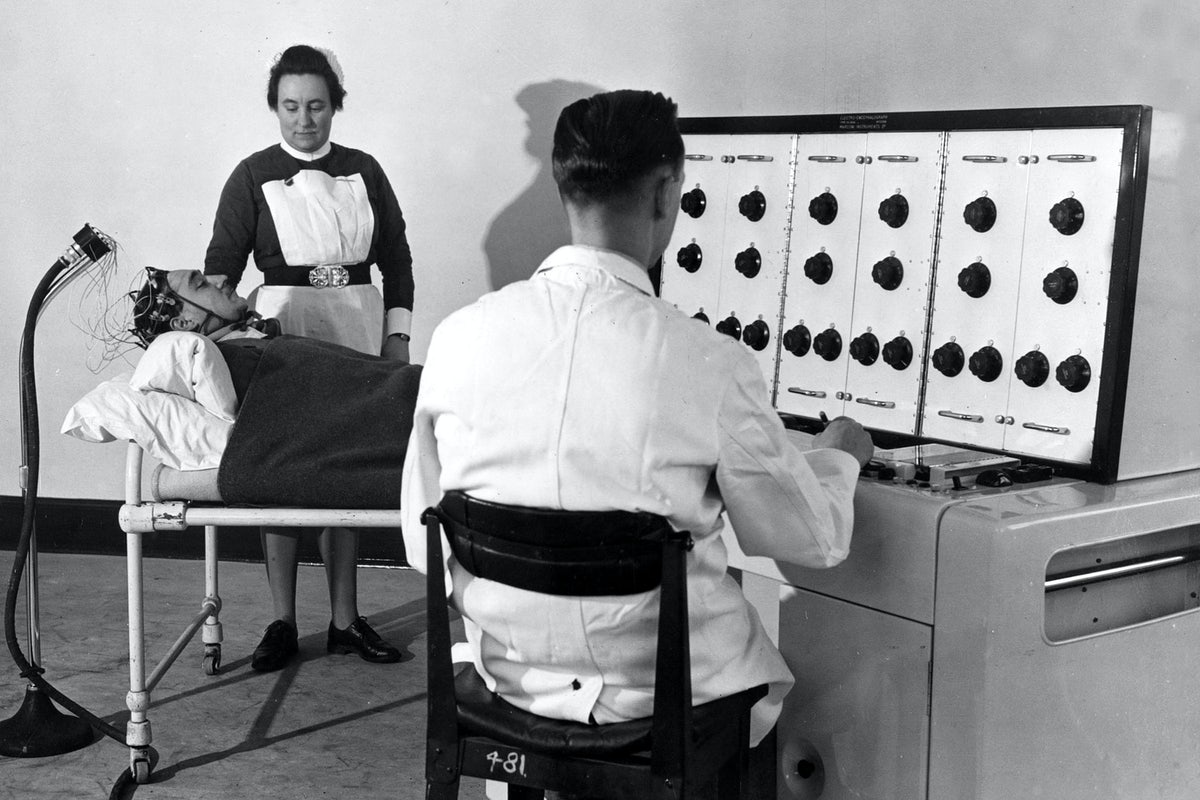
After the group work as seen above, we watched a video about the Milgram Shock Experiment which illustrated how willingly participants would obey authority figures even if it meant harm to others. The experiment demonstrated average citizens who would be the “teacher” and a confederate who would be the “learner”. The teacher would be instructed to shock the learners in increasing increments whenever a wrong answer was given. When the learner was supposedly crying out in pain, the experimenter would tell the teacher to continue regardless of their morals. When the results came out, 65% of the participants shocked all the way, demonstrating how most people are unable to resist authority. After watching this video, we discussed that a good leader is one who is unwavering and persistent with their plans. This is seen in the video where the experimenter would consistently say it is vital for the learner to continue despite their protests. Similarly, in Animal Farm, those who do obey the authority do not suffer as much as those who do not. - Reward System
Symbolic Connections
Stalin’s Five Year Plan to modernize the Soviet Union yielded similar results as in Animal Farm. With the construction of the windmill, Napoleon ordered immense labor from the other animals and it represented the power struggle between Napoleon and Snowball. In addition, the hens were willing to fly up to the rafters and kill their young as a protest against Napoleon’s restrictions. This was George Orwell showing the peasant attempts made against collectivization.
Thoughts Regarding the Reading
In Chapter 7, I am not surprised by the actions of Napoleon because he has been known for manipulating others by the use of propaganda. In this chapter, he acknowledges the fact that the humans are waiting for the failure and in order to combat their desires, he deceives Mr. Whymper into believing that they are not short in food by filling the bins with sand and only a bit of grain on the very top. By doing so, Napoleon creates the illusion that they are running the farm smoothly without the help of humans. In addition to the lies about their farm, Napoleon deceives the animals into believing that Snowball was in cooperation with Mr. Jones from the start. He does so by having Squealer tell the animals that they discovered documents linking the two as a duo. Similar to our lesson today, Squealer utilizes deception with their memory as a way to use Snowball as a scapegoat for all the issues in the farm. 
Personal feelings and thoughts about what is happening right now
Honestly like any other person would be, I am concerned about the situation with COVID-19 and how it is affecting everyone in all parts of the world. I find it insanely shocking that we’re all quarantined at home for an unknown period of time and I am in fear of the possibilities that could occur. At the beginning, we all thought that it wasn’t going to be serious but now the U.S. has the most cases, specifically, New York City. I hope that everyone is safe and taking necessary precautions in order to prevent the spreading of the virus.
REFLECTION:
Today I learned how the memory of others can be easily manipulated in order to justify the rule of authority figures. With sources of propaganda, people are often susceptible to be deceived into believing false ideas. For example, propaganda is utilized throughout Animal Farm, causing the animals to trust Napoleon and view Snowball and humans as the enemy. Another example in Animal Farm would be when Squealer accuses Snowball of treachery and that his “heroic” acts in the Battle of Cowshed were all false. This causes the other animals to question their memory, even Boxer who is known to be unintelligent. In addition to memory, we learned about authority and how people are willing to go to extreme measures in order to complete the requests of authority figures. This is seen in the experiment where the majority of the people did comply with the orders of the experimenter even though they conflicted with their morals. Personally, I feel that I would have probably done what most people did and been shocked all the way and the reason being is because I was taught at an early age that you should always respect those above you whether it is your parents, teachers, etc. I would have wanted to satisfy the experimenter’s commands and without realizing it, I am actually causing more harm. Now. with this knowledge, I am going to be more aware of my surroundings in order to prevent deception of my memory and follow my morals rather than authority figures. Both memory and authority can be applied to real world situations and as a result, people must be careful of who they should trust and comply with because the effects of their decisions can be harmful to others. 


Monday, April 20, 2020

Blog #13- Jason Jiang- Period 2- 3/5/2020

Sophomore 2020 Blog
Thursday, March 5, 2020 
Jason Jiang
Period 2

Aim: How does knowledge of the attributes of the novel lead to the creation of an original fable project with visual and oral representations?


Do Now: Why do you believe students often become fearful when projects/presentations are assigned ? 
- Students often become fearful when projects and presentations are assigned because students usually leave their projects until the last few days to do the projects 
- Students procrastinate 
- Students have to focus on their projects along with daily everyday work such as homework, tests, and mini works.  
Allegory is 
- A form of extended metaphor 
- A story with two meanings a literally mean and figurative meaning 
Animal Farm as an Allegory 
- Animal Farm = History of Russia from 1918 - 1943
- Animalistic = Communism 
- Character Figures = Russian Historical


We then progressed to doing this…
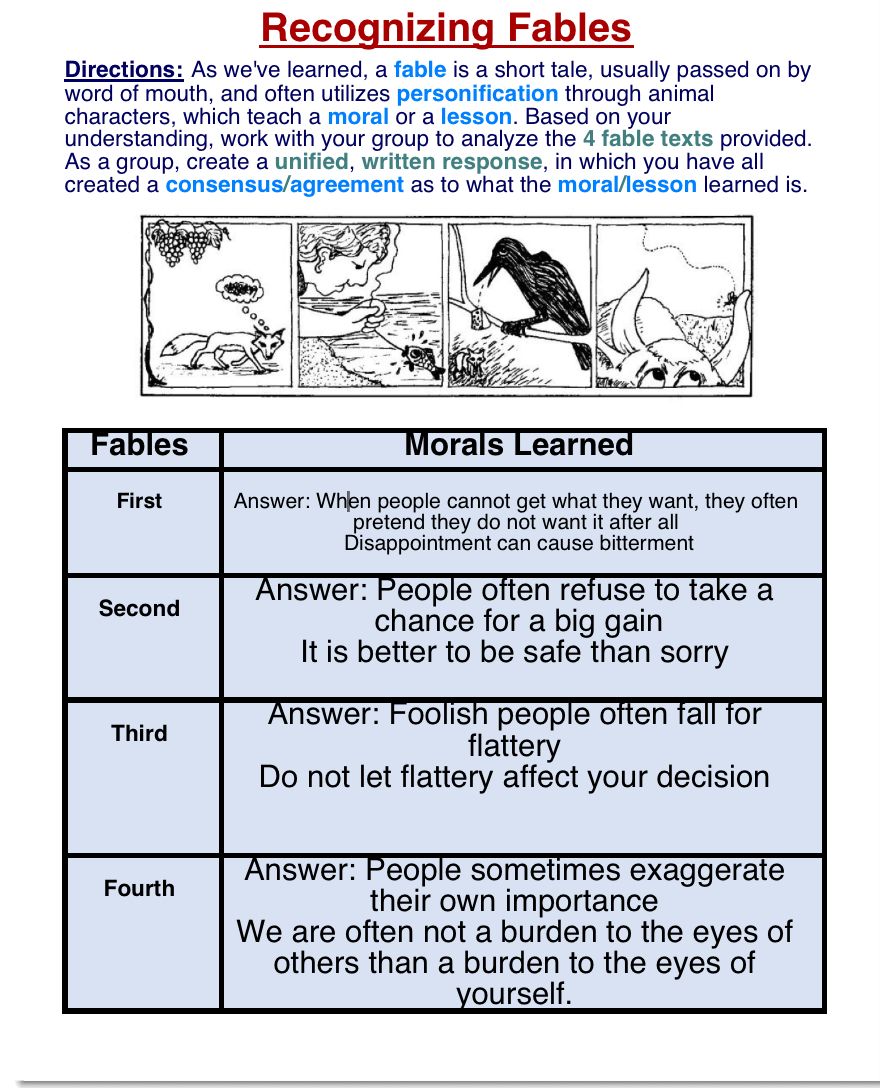
Recognizing Fables 
- Maker space only available to us for two days 
- Go up to Maker Space with a plan and Be prepared
- Be mindful and be caution in Maker space 
- Keep track of time 
Provided an extensive moral list that will help us figure out to use in the assignment.


Reflection: I learned that a fable is more than simply a tale told on and on during time. A fable consists of many attributes such as mystical characters, morals, and much more. Also, Animal Farm is an allegory because it is a passage that portrays a metaphorical meaning. 

Blog #15- Annie Jiang- Period 2- 3/9/2020

March 9th, 2020
Annie Jiang
Period 2
Sophomores 2020


Aim: How can the elevator pitch and consultant protocol provide clarity and feedback for our fable project? 


Notes
Today we gathered in our groups to discuss each of our fables for the project. We completed parts of the peer-editing process in “rounds.” In these rounds, we created and shared short summaries, “elevator pitches,” and we gave each other constructive criticism.


Round 1
Create an elevator pitch for the fable you created. Your pitch should address the moral you chose and the fable story idea you related from the outline. Be prepared to “pitch” your idea to your team in Round 2.
  • For the first round we prepared short and simple summaries about our original fables individually.


Round 2
Presenter: You will pitch your idea to your teammates.
Teammates: Listen carefully/actively to the presenter. Record probing questions.
  • Everyone in the team shared their “elevator pitches.” I found that everybody’s stories and morals varied greatly.


Round 3
Teammates: Have 1 minute to ask the presenters any probing questions.
Presenter: Record the feedback you receive.
  • During this round, questions like “How did this event happen?” or “Why was this animal chosen to represent a character?” popped up.


Round 4
Teammates: Have 1 minute to bring (concrete/takeaway) suggestions to the presenters.
Presenter: Record the feedback you receive.
  • We gave each other criticism on what could be improved. I found that for my own story I should add more detail to make it clearer.


Reflection
Today we learned an effective way to give and receive feedback on our fables. We created elevator pitches and presented them among our groups. We learned this because this allows for us to see our stories from multiple perspectives and find different approaches to the same thing. Moving forward, I will apply the feedback I had received to my fable. Using the feedback will help my fable become the best version that it can be.