Monday, May 4, 2020

Blog#29 - Eva Zheng- Period 1- 5/4/2020


Blog #29 -Eva Zheng Period 1 - 5/4/2020


Eva Zheng 
5/4/2020
Period 1 
Freshman Lit #12 
Blogger #29


Aim: How can we evaluate Odysseus' leadership through his decision-making in
his encounter  with "Scylla and Charybdis" in Homer's Odyssey?


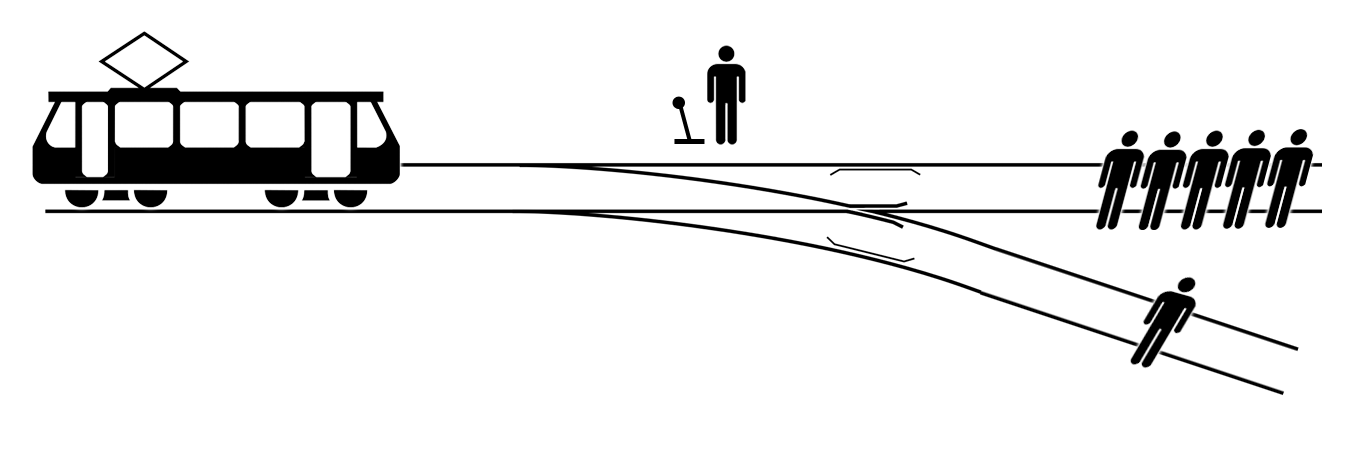
In class today, we learned about the trolley problem, which is a hypothetical situation
where we are on a train track set to kill a person, but we could pull the lever to save
those five people but kill another one instead. It is an ethical dilemma that forces us to
analyze whether the outcomes of something justifies it. We played a Kahoot where different
variables of the trolley question were changed ex) whether the five people are pregnant or
skilled surgeons. The results of these were skewed, which showed that there is no unified
answer for these. In the Odyssey, Odysseus is forced into a similar situation as he could
either stick close to Scylla(6 headed monster) and lose six men, or Charybdis and have
everyone on the ship die. Although he ultimately chooses to sail near Scylla, he still feels
guilty seeing six of his men being brutally murdered in front of him. ig

Trolley problem - Wikipedia


 Then, we also learned about allusions. Allusions are a brief reference within a literary work
to a historical, literary, biblical event. They are not meant to be explained, as the author expects
that their audience will recognize them already. Allusions can help set up the framework for a theme
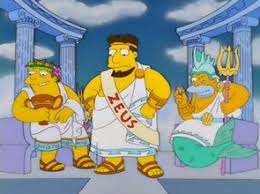
and help relate the work to the audience. In the image shown below, the Simpsons referenced the
greek gods in an episode. For homework, we had to find various allusions in the work of our choosing.
I chose "To Kill a Mockingbird," by Harper Lee to analyze. When Uncle Jack is eating with Atticus,
he says, "Let this cup pass from you, eh?". This is a biblical allusion, as in the bible, Jesus took the
cup from God, knowing that he was going to be sacrificed for making the right decision. This
allusion also helps contribute to the theme of doing what is right, as Atticus knew he was going
to suffer from defending a black man in a prejudiced neighborhood, but he continues the case as
he knew it is moral. 


Reflection: Today, we learned about the Trolley Problem, and what makes it ethically
significant. Like most philosophical problems, there is no definitive or correct solution,
which is what has kept it alive for so many decades. There are a lot of variables that could
influence our decisions, like whether or not you are choosing to kill your friend or someone
that is giving birth. By learning what this is, we could connect it to the Odyssey, by stepping
inside his shoes when he is faced with a similar problem. We also learned about allusions
today, which are an indirect reference to something that is not explained. There are mainly
four types of Allusions: Biblical (refers to religious work), Classical (refers to classical
literature), Literary (quotes to another literary work), and historical (relating to events in
history.) We must recognize these, as they are prevalent in literary/cinematic works.
Some examples are shown with the tv show The Simpsons, as it has alluded to many works,
including Harry Potter, Star Wars, and even Lord of the flies. They can help create a mood,
help audiences relate to their work, and contribute to a particular theme. By recognizing these
allusions, we can get a firmer grasp of the message the writer is trying to convey to us.
In the future, I could use allusion to have my reader gain a richer understanding of my
work and to have them achieve a higher perspective of events in my work. In essence, today,
our class learned about The Trolley problem and how it's alluded in The Odyssey, along with
different types of allusions and how they are used.
TV Shows - The Odyssey Allusions


I am learning that many people in the world can be very ignorant and xenophobic, due to their
reactions to the Coronvirus. Ever since the possibility that the coronavirus emerged from China
was announced, anti-Chinese sentiment and rapidly increasing world violence have been occurring.
Since February 1, New York City's Commission of Human rights says it has received around 248
complaints of discrimination spurred over fears of the virus. A specific example of this is footage
released to form an acid attack in Brooklyn. A man sneaks up on an Asian American lady and pours
a fluid that causes second-degree burns. Jeju Noodle bar was recently vandalized with racist graffiti-
someone wrote "Stop eating dogs" on the window of the restaurant. The owner describes that he is
fearful of doing the smallest actions outside, over the anxiety of racist actions. These racist attacks
are not only scary but also too close to home. While viruses don't discriminate between hosts based on their race, nationality, or ethnicity- misinformation and stigma do. 
Coronavirus pandemic triggers racist attacks against Asian ...


Working at home has been a new experience that I am adapting to. Rather than sitting at school for
around 7 hours per day, I can break up the work and plan for other days, as we get our work in a
three-day cycle. With this new time, I have taken the initiative to do other activities, which include
reading, writing, improving my Russian skills, and attempting to learn how to code. However, doing
work at home requires a certain level of responsibility. It is easy to get distracted at home and waste
time, so we have to keep track of assignments each day. I use a planner app with different categories
for my list. No one is disciplining you and reminding you about the work due daily. It can get a little
lonely sometimes because I miss my teachers and friends in real life and the exciting discussions and
interaction that we shared daily. Feelings of uncertainty and sadness can arise, as we have no idea
when the virus will end, and how many people will have to suffer from it, but all we can do is to stay
at home. The schedule and routine we once had are gone, and we have to adjust to it for the time
being. 

Saturday, May 2, 2020

Blog #24: Ethan Parilla: Period 7: 4/30/20

4/30/20
Ethan Parilla
Period 7
2020 Sophomores
Aim: How do George Orwell's themes of literary protest transcend time?

  1. Elitism is leadership by a socially superior minority group. In what ways is elitism fostered among the pigs of Animal Farm?

Elitism is fostered among the animals by pigs and dogs. The pigs and dogs undoubtedly have the best lives on the farm, with the pigs eating the most and doing the least manual labour. Through a mix of fear, belief, and not knowing any better, the other animals follow whatever the pigs say without much question. Even Napoleon’s 300 offspring who have no immediate merit to the success of the farm and aren’t needed that much are treated much better than the common animal, even receiving an education. The pigs walking on two legs, which was originally against the commandments, and wearing special green armbands is the biggest physical sign of elitism and harkens back to Nazi Germany with the Nazis. 

  1. Is there evidence that Elitism still exists in our society? If so, how?

Elitism does exist in our society today, as can be seen with people in higher power such as politicians and celebrities. People are more inclined to believe these kinds of people, an example of ethos, for various reasons, such as their credibility or that they look up to them. However, sometimes like in Animal Farm, some of these people lead without any intrinsic merit and are an emulation of the pigs, though to a much lesser extent. 

After these do now questions, the class discussed a situation given to us. This was about what we would do if we were sent embarrassing photos of another student who was visibly upset by them. Most of us agreed that we would help them in some way, though we differed in the way we’d do it. Some people suggested simply going to a person in charge, like the principal, to report whoever sent the photos. Others suggested a more passive suggestion which was not showing any emotion towards the photo and just letting the student know we would help them get through it. As a final question, we were asked if we would stand up to the bully directly, and most of us agreed it would be better than remaining a bystander. 

When we finished with the situation, we then had a discussion surrounding Richard Wright’s quote, “All literature is protest. You can't name a single novel that isn't protest.” In general, the class agreed with the statement. All forms of literature serve to make some kind of point, and we aren’t even conscious of it sometimes. Animal Farm in particular is a prime example of protest, as it was a direct allegory of communism. It’s main purpose was to show how atrocious the communist society was and to provide a warning against it for future generations. 

After we finished this discussion, we moved on to the themes of the novel, specifically irony and bullying. The irony in the novel is especially present in the final line of the book, “The creatures outside looked from pig to man, and from man to pig, and from pig to man again; but already it was impossible to say which was which.” This is true irony at play because the animals went full circle and became what they swore never to become and fought against. Further themes include bullying and its effects, which we talked about after. Napoleon uses bullying as one of his tactics to subdue the rest of the farm animals under his will. The most effective of this was his use of his indoctrinated dogs to subdue the animals, and even gaslight them into killing themselves. After this, we watched two videos on bullying, both relating to bullying in social media. One featured a girl and her soccer team helped a goalie who was being bullied for “letting” goals in feel better and see that it wasn’t his fault. The other video was a TED talk with another girl who studied the effects of cyberbullying and talked about how she is trying to reduce it completely. 

The final slide in the lesson talked about satire and themes. Satire is a type of writing meant to mock human weaknesses and follies as a form of protest against them. It over exaggerates its topic in order to show how absurd it is to the people reading or watching. Animal farm is a prime example of satire, as all of the figures in the book are talking animals, which are often only seen in children’s books. The absurdity of animals talking with each other and forming a farm and trading with humans is only there to heighten the point that the communist society it was portraying was absurd. The narrative is also presented in a way that makes it so that while a bit unbelievable, it doesn’t seem impossible that humans would come to the same conclusion that the animals did. Another topic discussed was themes. Some of the most important themes were “Power tends to corrupt, and absolute power corrupts absolutely,” “Language can be manipulated as an instrument of control,” and “Unquestioning allegiance to authority invites abuse of power.” The first theme can be seen with Napoleon, as he originally started out with the intent to change the farm for the better, but the power from his new role corrupted him into becoming who he was at the end of the book. The phrase “the road to hell is paved with good intentions” can also be used here. Language is used against the largely dumb and illiterate animals by the more educated pigs, especially Napoleon and Squealer. Squealer throws around buzzwords that the animals don’t really understand, but does it with a certain energy, such as him hopping from side to side whenever he spoke, that they believe what he says. This also ties into the last theme, as the animals never really questioned Napoleon’s methods and leadership until the end, when it was too late. 

What did I learn?
  • I learned the themes present in Animal Farm and why they were important. Leaders and the way they run their societies are very important, but the people’s response is just as important. If we say nothing in the face of tyranny, then we are just as bad as the dictators. 
Why did I learn it?
  • I learned this in order to become aware of it, and to try and help prevent or stops such a path before it gets out of control. Since we finished the novel, it gave us a good understanding of what it was talking about and what it was warning about. 
How will I use what I learned?
  • I will use what I learned to keep watch for any of the warning signs present in the book. I will especially use it’s message on bullying to a great extent as that is common for my demographic. I will also use what I have learned about analyzing a book’s theme on other books I read in order to gain a better understanding of them. 

Personal Questions

  • The updates surrounding the world/community regarding this virus are coming out at a steady pace, as they have been for the past month. However, data has shown that the US may hit the apex soon, so that is destressing to say the least. 
  • I am learning that some people are extremely selfish when it comes to their reaction to this virus. A glaring example are the protests in Michigan against the lockdown, citing they “need a haircut” and other such claims. I am also learning that the best in people truly comes out during times of need, and that the healthcare workers are truly selfless people. 
  • When it comes to my personal feelings to this, I am largely indifferent, as the change in my life wasn’t as drastic as others. I do empathize with those who have been affected, however, and I truly only hope for the best for everyone.

Friday, May 1, 2020

Blog #26 - Crystal Sembhi - Period 9 - 5/1/2020

Crystal Sembhi
Blog #26
Period 9
May 1, 2020
Sophomore 2020


Aim: How do George Orwell's themes of literary protest transcend time?

Do Now

1) Elitism is leadership by a socially superior minority group. In what ways is elitism fostered among the pigs of Animal Farm?

For class today, we started off with the Do Now by discussing how Elitism is present amongst the pigs in Animal Farm. Majority of the class responded with different examples of how the pigs used their power and authority over the other animals to manipulate them, whilst spoiling themselves with riches. For example, the pigs, since they were in close relation to Napoleon, got to eat better food such as apples and milk, got to break the rules and dress with green ribbons on their tails and got to live in the house. They even received schooling from Napoleon himself, to better their understanding and knowledge of the world and have an advantage over the others.


2) Is there evidence that Elitism still exists in our society? If so, how?

For this question, the class agreed that Elitism does in fact still exist in our society today. This is represented by the advantages and richer lifestyles that so many of the elite have compared to the common people of society. They often have better clothing, housing, schooling and shelter and most of them spend less time working or work in better conditions than the average person while still earning more. This can also be seen in terms of the fancy and expensive clothing that royal members wear to show their regal status.


Class Notes


After completing the Do Now, the class was given a scenario to read and discuss.


Most of the class agreed that they would go and check on the student who had left the room clearly upset over their classmates’ antics. Some people even said that they would confront the classmates and tell them that what they did was wrong. They would explain how cyberbullying is just as bad as bullying in person and how their mean words and actions, no matter how big or small, can take a negative toll on the person targeted.


After discussing this cyberbullying scenario, the class learned about an American author by the name of Richard Wright who wrote literature concerning racial themes.


Following this slide, we conducted a class discussion about the following Richard Wright quote:

“All literature is protest. You can't name a single novel that isn't protest.”

In response to this quote, most of the class agreed that quote is in fact true. There will always be something in a piece of literature that ignites disagreement amongst readers. It’s not that the piece was written clearly to protest, which in this case, Animal Farm actually was, but that there’s something in the writing that not everyone would agree with, regardless of the author’s intent or views.


Afterwards, we were asked to contemplate the following quote by George Orwell found in the final chapter of Animal Farm:

“The creatures outside looked from pig to man, and from man to pig, and from pig to man again; but already it was impossible to say which was which.”


  1. What themes are elicited from George Orwell’s Animal Farm?

The class listed off some of the themes that they found present in Animal Farm which include: absolute power corrupts, ignorance can lead to detrimental consequences, propaganda and propaganda can be used as a method of manipulation.


Videos:

  1. “Bystander Revolution: Bella” https://www.youtube.com/watch?v=ChIimw3gcCg
  2. “Rethink before you type” - https://www.youtube.com/watch?v=YkzwHuf6C2U


Following the two videos, the class turned to a separate pdf to look at the satire and different themes present in Animal Farm.


Themes present in Animal Farm

  • Unquestioning allegiance to authority invites abuse of power

  • Power tends to corrupt, and absolute power corrupts absolutely

  • Language can be manipulated as an instrument of control


At the end of the lesson, students were assigned two discussion board prompts to answer.

Our Generation Discussion Board


  1. How would George Orwell want to inspire your generation?

  1. What is one thing you could do this week?


We were also asked to respond to the answer of a peer.


Reflection of the Lesson

In this lesson, I learned about how literary themes and satires present in pieces of literature, stand the test of time, impacting not only readers at the time, but future generations as well. Whether the message in the writing is intentional or not, it still impacts the reader, perhaps changing their view on certain things or hardening their previous opinions on others and this effect continues from reader to reader time after time. In Animal Farm for example, a recurring theme is that power tends to corrupt. This theme is meant to teach others whether at the time or in the future an imperative lesson so that hopefully history won’t repeat itself. From what I learned in this lesson, I will be sure to pay more attention to what I read and what messages lay hidden within. Generally, I just read books and if they have a theme then I take note of it if I need it for an assignment. Now I hope to take note of what is written and make use of it for the future. 


Personal Thoughts and Feelings

For this past reading we finished up Animal Farm with Chapter 10. I have to say that this chapter was funny in how greatly ironic it was and yet it was such a dark chapter for the same reason, which is why I enjoyed this reading. By the end of the novel, so many of the characters that we had in the beginning were now either dead, old or simply forgotten. They had started off with such spirit, demanding their freedom from the humans and promising each other that never in a million years would they end up as the monsters that the humans were. And with great irony, that is exactly what happened. But now, Napoleon and the pigs were in charge and they enjoyed the power and the rich lifestyle that Jones and his men once had. They had gone completely against the rules of Animalism and while the rest of the animals worked hard, the pigs and dogs just ruled over them doing very little. It’s sad and disappointing to see the same thing happen again, but that means the book has come full circle and Orwell has succeeded in getting his message across.

In regards to what is happening right now, quarantine can get very boring and even suffocating at times, but I understand it and understand that it's for the best no matter how long we may be stuck at home. It feels nice to at least have my family by my side, going through this with me, regardless of how they drive me crazy most of time. Working from home has certainly been a different experience to say the least. Everything is now online, tests, quizzes, homework, projects. etc. and it tends to get very stressful. On the positive side, we have ample time to complete each assignment and we are supposed to have only 3 things due each day depending on when the class was. However, there are also drawbacks. Since we have so much time to do our assignments and we’re stuck at home, with no need to go to school early the next day, it seems that I have very little motivation to do the work. I keep getting distracted or start procrastinating and putting things off till the last minute and it’s also harder for me to understand new material. On top of that, not all teachers give the same amount of work and don’t always make it due the day it’s supposed to, so I often have more than 3 things due on the same day. It’s been about a month into remote learning, and I’m still getting used to it.

Blog #29 - Tyler Wong - Period 3 - 05/01/2020

Tyler Wong
Blog #29
Period 3
5/1/20
Sophomores 2020

Aim: How do George Orwell’s themes of literary protest transcend time?

Do Now: 
  • Elitism is consciousness of or pride in belonging to a select or favored group.

Elitism is shown in the pigs and the dogs because they are shown as the rule makers. This allows the pigs and dogs to become like a totalitaristic society and government. The pigs and dogs are viewed as superior. They show their elitism every time they change the rules or decide to bend rules to their benefit.There is evidence that elitism still exists in our society showing that in the 1900s, many countries and societies have implemented it into their ruling system. For example, in Nazi Germany, the German People and people who were not of Jewish descent had more rights than the Jewish at the time. The Nazis had swastikas that they wore around their arms. They used it to show superiority towards everyone who was not a part of their movement and the pigs in Animal Farm also did this when they started walking on their hind legs and wearing green bands around their arms.

  • In today's society, examples of elitism can be based on the position of someone. An example of this would be a group of people or political insiders who enjoy the benefits of the nation, benefits of great wealth and all at the expense of the taxpayers.

Furthermore, along with the lesson, the class was given a discussion board with the prompts:
  1. How would George Orwell want to inspire your generation?
  2. What is one thing you could do this week?

  • I answered the questions by saying that Orwell would want to inspire us to look at the bigger picture of what is going on at the moment seeing that everyone is focused on COVID-19 now and not how isolation can change and affect people’s well being and social life. Orwell in his many books shows how the government could go wrong in many ways and how people with too much power can always be corrupt. The quote “Power tends to corrupt and absolute power corrupts absolutely” ~Lord Acton is a great theme for Orwell’s book Animal Farm. 
  • One thing that all of us could do this week with the ongoing pandemic of COVID-19 would be to look up and research the truth about the virus seeing that we are flooded with news. All of the news and information given could misguide or overload us clouding our judgement. Orwell would want us to see through what the media wants us to see and would want us to make our own deductions based off of our own research.

Student Reflection
Throughout this lesson, the themes of Animal farm and the purpose of the novel was to show that power corrupts and absolute power absolutely corrupts. The main reason of the novel was to show the flaws of the government at the time and it was to protest against communism and show how communism could take the turn for the worst. In the book, Napoleon became corrupt, changing rules and his present laws into laws and rules that benefit him and his kind of people. The book outlines and shows that leaders and important people are not always correct and it is important for the public to have their own opinion and to know what they want and what is good for them. It is necessary to hold checks and balances to make sure that a dictatorship will not erupt from a free country and so that no freedoms that should not be restricted are not restricted. This is shown in our government where there are three branches (Executive, Legislative, and Judicial) which all hold checks and balances for each other making sure that no single branch is overstepping their boundaries.

Blog #28 - Sean Zhao - Period 1 - 5/1/2020

Freshmen 2020 5/1/20 Sean Zhao, period 1

Aim:  How can we evaluate Odysseus’ leadership through his decision-making in his encounter with “Scylla and Charybdis” in Homer’s Odyssey?
I felt that today’s reading inspired many thought-provoking ideas on sacrifice for the greater good. Today’s reading was on Scylla and Charybdis. Scylla was a monster with multiple heads but was only able to eat one person per mouth. Charybdis was a sea monster that would create a whirlpool, which would ensure the demise of any ship that sailed over it. Odysseus must choose which monster to encounter, with losses in either option. We were able to fully connect with the moral dilemma Odysseus faced, where he had to sacrifice 6 of his men for the survival of the remaining group. It also shows that Odysseus will sometimes hide information from his men in order to prevent mass panic. He chose not to share the tidbit that 6 of the crew had to die in order to proceed with the journey, which shows that he is not always transparent with his men. He also states that they have faced moral peril like this before, reminding them of their experience at Polyphemus’ cave. This situation is different in a major way, however. Odysseus knows beforehand that he will have to suffer major losses to his crew in order to proceed with his journey. He knows with 100% certainty that not everyone in his crew is going to make it, when before he had solace that he could be able to find a clever way to escape with everyone alive. This crushing blow to his morale is not conveyed to his crew, as he does not tell them of their imminent doom. 
The way we were introduced to the reading today was with the thought experiment “The  Trolly Problem.” In this problem, a train is heading towards 5 workers, and there is a lever you can pull in order to divert the train onto a different track where there is a single worker instead. Most are quick to pull the lever, as they rationalize that saving 5 lives in exchange for losing one is a positive net gain. However, when the question shifts to stopping the trolley by throwing another person off a bridge in front of the train, the majority chooses to do nothing and let the train run its course. This shows that people are not willing to physically be involved in the killing of another person, even when the killing was for the greater good. We then played a Kahoot to see the class’ answers to different scenarios based around this question, such as the 5 people being escaped convicts or the 1 person being a world-class surgeon. This connects with our reading because Odysseus must choose which monster to face. He knows that Charybdis, the whirlpool, would be immediately fatal to his entire crew, while Scylla can only eat some of his crew, and the rest survive. 
The main lesson was about allusions in literature. An allusion is a reference in a story to another work. The reference is short, and is usually not explained by the author. A common type of allusion is to the bible and is known as a biblical reference. We learned this in order to recognize allusions in future pieces of literature, and able to understand them, without becoming confused. I can use this knowledge on allusions so I can recognize the message and theme the author is trying to convey through the illusion. An example of an allusion is the “So Long, Farewell.” clip from Family Guy, where the characters reenact a scene from the movie The Sound of Music. 
          The simile of  “between a rock and a hard place,” alludes to the reading for today, where Odysseus is literally between rocks that will destroy his ship, and the two monsters that serve as the hard place. It shows that Odysseus is in an unwinnable situation, where no matter which option he chooses, he is going to lose some of his crew.
Working from home has been a smooth and comfortable experience for me. I no longer have to wake up at the crack of dawn to arrive at school on time. My workload has been manageable, and I am still learning quite a lot from the assignments in my different classes. A major hurdle is the constant distractions that come from being at home, and not in the classroom. Some recent news that was most impactful to me was the decision to have the rest of the school year be conducted virtually. Many of my peers assumed that this quarantine would be over late April, and we would return to normalcy. With this hope extinguished, many started to lose determination and motivation to do well in school. 

Blog #26 - Rachael Zeng - Period 1 - 4/28/2020

Blog #26- 4/28/20 - Rachael Zeng - Period 1 - Freshmen 2020

Our aim for this lesson was “How does Odysseus' strategic leadership further characterize him as an epic hero in "The Sirens" episode of Homer's Odyssey?”, and our do now was to choose between the three morals from Aesop’s Fable and to paraphrase/explain it. 

Working from home is nice and seemed alright at first due to being able to communicate with my teachers and peers without physically being with each other, but it became more stressful after my wifi connection became unstable, and I was unable to submit and view certain assignments, causing me to have a larger workload than other students. However, it isn’t terrible, as I can work on my own time. 

My current thoughts and feelings about the quarantine and the virus overall are very jumbled. I feel that the current situation I am in is fine, as we still have food and other necessities (except for a stable wifi connection, so I can’t work very consistently), but I know that the situation is more dire, and my family is beginning to get restless. And despite getting more rest than I normally do, I’m feeling much more tired than usual. All the days feel the same, and I’m losing track of what day of the week it is. I’m just very grateful that when my mother got tested positive for COVID-19, she did not infect anybody else and was relatively fine while the virus was active. 

What I’m learning from my community based off of their reactions is that for the most part, our community keeps to themselves, an exception being my family and my cousins, as we live next to each other and take turns going out for groceries. However, my online friends appear to be taking the quarantine quite well (from what I see, at least), their only problem being online classes. 

Some of the more important notes from today’s lesson (in my opinion) is the foreshadowing that could be seen in lines 701 - 703 of the reading. It states that “Then all at once the wind fell, and a calm / came over all the sea, as though some power / lulled the swell.” As Mrs. Peterson had said, it was like the metaphor “calm before the storm”, as a few lines after this, Odysseus begins to struggle to escape and become lured in by the sirens’ songs. Something I just happened to find interesting was the different ways that the sirens were represented in literature and media. In one video, the sirens were said to be half bird half person, while in books and movies like the Pirates of the Caribbean, sirens are more mermaid-like. Are their songs really that enchanting? Do they actually sing well? I have a few unanswered questions, but I’m not expecting actual answers to them.