Thursday, May 28, 2020

Blog #42: Mindy Chin: Period 7: 5/28/20

Wednesday, May 27, 2020


5/28/20

Mindy Chin 

Blog #42

Period 7 Sophomores 2020 


Aim: How does the setting of the novel contribute to the mood and tone of 1984? 

Do Now: Turn & Talk 

Consider your knowledge of Oceania thus far. What words, which provide “tone” might you use to describe Oceania (create a list)? Explain your word choices. 

  • Gloomy, dark, dreary (depressing tone) 

  • Oppressive, repressive (restricts individual thought) 

  • Dystopian (imperfect, negative connotation is implied) 


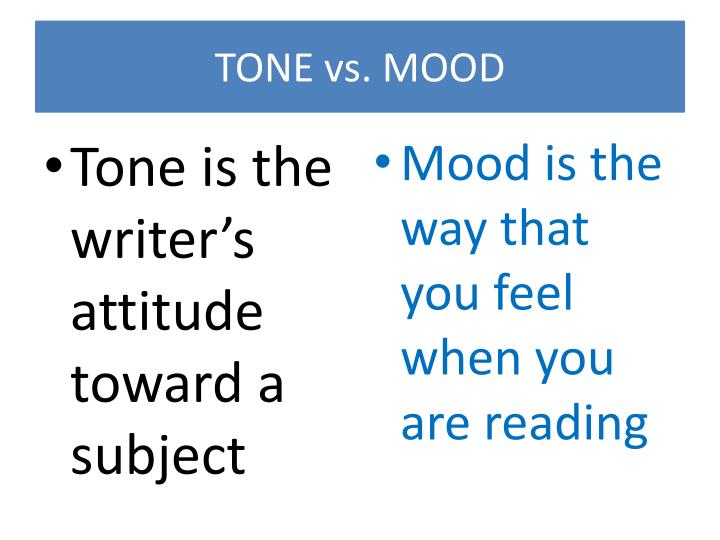
What is Tone and Mood? How do they differ? 

  • Tone: demonstrates how the speaker feels 

  • Mood: demonstrates how the reader feels

*Reminder: the speaker is not always the author; it can be a narrator 


Class Discussion 

  1. How would you compare Winston’s tone to the reader’s mood? 

Winston’s tone is bleak and conveys a negative connotation. He lives in constant fear of who will become the next to be vaporized. His life is very dull and mundane, with no purpose or aim for the future. As a reader, I feel sympathetic toward his situation in that I live in a federal republic that allows for freedom of speech, religion, press, etc. As a result, I know that repression of freedom in a totalitarian government strips all hope for the future away. 

  1. How does Winston’s tone compare to the rest of Oceania? 

Unlike the rest of Oceania, Winston questions authority but continues with his work as he understands the consequences he will face if he rebels. Other citizens of Oceania are ignorant of a life outside their current living situation, which explains why they are so submissive to totalitarian rule. However, as a clerk working for the Ministry of Truth, Winston understands that his job rewriting historical documents is innately wrong and solely used to oblige to the Party. 


What is Setting? 

Setting: the time, place, physical details and circumstances in which a story occurs. Includes the background, atmosphere, or environment in which characters live and move, and usually include physical characteristics of the surroundings. 

Class Discussion

1. Why is setting important? 

Setting helps establish the mood/tone of the story, thereby affecting the way a character’s actions plays in the story. For instance, if it were not for the totalitarian government dictating all actions that could be made, Winston would be free to do whatever he wanted. However, thoughts of rebelling begin to arise as a result of the oppressive nature of the system of Oceania. 

2. How does it contribute to the meaning of the work as a whole? 

Setting helps to set the mood, influence the way characters behave, foreshadow events, and reflect the society in which characters live in, etc. The setting provides a foundation for a character’s tale. 

Vocabulary

  • Pal/imp/sest (N) (the p after the m is silent): a manuscript or piece of writing material on which the original writing has been effaced to make room for later writing but of which traces remain. 

*How does palimpsest impact the past (history) and how does the government benefit in the future due to its implementation? 

As a worker under the Ministry of Truth, Winston eradicated Comrade Withers from history and replaced him with Comrade Ogilvy, an ideal follower of Big Brother in order to cover up Comrade Withers from being vaporized. In order to keep the government in control, the Ministry of Truth constantly changes documents from the past in order to prevent people from comparing their current lifestyle to the lifestyle they had in the past. 


“The Eleventh Edition is the definitive edition, he said.” “We’re getting the language into

its final shape—the shape it’s going to have when nobody speaks anything else. When we’ve

finished with it, people like you will have to learn it all over again. You think, I dare say, that

our chief job is inventing new words. But not a bit of it! We’re destroying words—scores of

them, hundreds of them, every day. We’re cutting the language down to the bone. The Eleventh

Edition won’t contain a single word that will become obsolete before the year 2050.”


He bit hungrily into his bread and swallowed a couple of mouthfuls, then continued

speaking, with a sort of pedant’s passion. His thin dark face had become animated, his eyes had

lost their mocking expression and grown almost dreamy.


‘”It’s a beautiful thing, the destruction of words.”
Syme Discussion: What are your thoughts about him? What stands out? Literary Device(s)

associated with him?

Syme is a language expert who works at the Ministry of Truth on the new edition of the Newspeak dictionary. He enjoys eradicating words, as noted by “It’s a beautiful thing, the destruction of words.” I think this is quite ironic because Syme is quite smart and Big Brother does not fancy people who are too smart as they are a threat to the position of the government. This also foreshadows Syme’s vaporization because as someone as intelligent as Syme (who knew why he was creating the new edition of the Newspeak dictionary) he had the potential of overthrowing the government of Oceania. The Ministry’s slogan is Ignorance is Freedom, which completely opposes Syme’s level of intelligence. 


The Dark–Haired Girl Discussion:

  • What are your thoughts about her?

Unlike Winston, I don’t think the dark-haired girl is a spy. Instead, I think that she will become Winston’s love interest as Winston adopts more individual thought over time. 

  • How does Winston feel about her?

Although Winston is attracted to the dark-haired girl, he keeps his distance in fear that she is a political  spy sent by the Thought Police watching his every move. 


Quarantine Questions: 

  • What is it like working from home? 

Initially, I enjoyed working from home because I could create my own schedule instead of following our school’s strict regime (ex: dictating when we could have our lunch break). However, I’ve noticed that in lockdown I’ve developed cabin fever, in that I’ve become tired of seeing the same house environment everyday. As a high school student, I miss the normalcy of being driven to the bus stop to catch the s79 and have that human-to-human interaction with friends/teachers. 

  • What are the updates around the world/community regarding the virus? 

On Memorial Day, people across the nation spent their time at beaches and seaside arcades without wearing any masks. In Florida and Missouri, huge crowds gathered at the beaches, disregarding all social distancing precautions. President Trump refused to wear a mask when visiting the Arlington National Cemetery on that day for a wreath-laying ceremony even though the Center for Disease Control and Prevention urged all Americans to wear them when in public. In Europe, businesses have started to reopen. Germany, for example, reopened its hotels, swimming pools, and campgrounds in an attempt to revive the economy while Greece allowed cafes, restaurants, and bars to reopen as well as domestic ferry services.   

  • Your own personal feelings about what’s happening now. 

It’s crazy to think that I’m living through a pandemic right now. As a 16-year-old, I had never experienced anything absurd worldly matter like this one (as 9/11 occurred before I was born). Though it is quite devastating to see businesses going bankrupt and people dying everyday, this pandemic has really changed my perspective on taking things for granted. Before this occurrence, I felt unappreciative of having access to a close-knit community at school. This pandemic has really opened my eyes in that it has taught me to live in the moment and to be appreciative of all the blessings I’ve been given. I’ve also learned that a majority of the world/community solely thinks about their own enjoyment to have the guts to ignore these stay-at-home orders. For instance, many people are cognisant of how infectious COVID is yet they continue to live their lives like nothing ever happened. It’s ignorant and cruel to all the healthcare workers who are working tirelessly daily to save as many lives as they can. 

See More: https://www.nytimes.com/2020/05/25/world/coronavirus-news-cases-deaths.html


Reflection

During today’s lesson I learned about the importance of setting in establishing mood/tone. In 1984, the setting of the story is set in Oceania. As a result, Winston’s tone appears very pessimistic and bleak under totalitarian rule. As a reader witnessing the oppressive nature of the government on Winston, I am able to sympathize with his repressed freedom, affecting my mood of the story. Additionally, I learned that a character’s tone influences the reader’s mood. 1984 is entirely written under Winston’s perspective, so our mood as readers is influenced by his viewpoint. If it were another character that was the narrator, our mood as readers would completely change. Syme is the exact opposite of Winston, as he is a pure example of censorship to the extreme. We would then feel more uplifted if it were Syme as he quite enjoyed “destroying words” when creating the new edition of Newspeak. This is very important as it is applicable in the real world. Everything is subjective in the real world, as our own thoughts and actions are determined by what we have experienced in the past and what we are currently experiencing in the present day. I learned about this subconscious bias so I could be more objective when it comes to disparate ideas. To apply what I’ve learned during today’s lesson, I will be more open to differing opinions and try to uphold an impartial mind when learning about new things and hearing about peoples’ ideas. For instance, a majority of the people ignoring social distancing guidelines are Trump supporters from the more conservative backgrounds. As a NYC student who has learned to be non-judgemental, I will try to be objective if coming to terms with someone who may disagree with stay-at-home orders, but that does not mean that I am obligated to change my perspective.  


Additional Resources

https://www.youtube.com/watch?v=iGVGAXE20FM (Part 1 Chapter 5 Analysis)

Blog #41 - Gabriel Garcia - Period 9 - 5/28/2020

May 28, 2020
Gabriel Garcia
Period 9
Sophomores 2020

Aim: How does the setting of the novel contribute to the mood and tone of 1984? 

Do Now: Turn and Talk - Consider your knowledge of Oceania thus far. What words, which provide “tone” might you use to describe Oceania (create a list)? Explain your word choices. 

     We began the lesson with the Do Now which tasked us with creating a list of words that describe the tone of Oceania. I personally said that Oceania is a very restrictive society where everyone is moderated in all aspects of life. Also, life in Oceania is very bleak, with people refraining from forming genuine friendships and relationships with others in favor of the rigid routine of the totalitarian regime. Some other answers included ominous which describes the way in which everyone lives in fear from the government’s watchful eyes.
     We continued the lesson by discussing the differences between tone and mood. Tone demonstrates how the speaker feels and mood describes how the reader feels. It is important to remember that the speaker is not always the author; it can be a narrator.
   
     The lesson continued with a class discussion comparing Winston’s tone with that of the reader. We found that they are very similar with both being pessimistic. As the reader, we see the immense control that the government has on society with every hint of dissent being swiftly cut down. It is difficult to see how this could change as we realize that Winston's struggle is ultimately hopeless against the wall of Big Brother’s oppression. Winston is pessimistic because he stands alone in the middle of an ocean of those who are against him. He seems to be the only one who can recall memories of life before INGSOC took over, but it is futile to spread this knowledge with others. Throughout the novel he accepts that he will most likely be vaporized along with many of his acquaintances, but does nothing to change this because he knows that he is little more than a minuscule and expendable cog in a massive machine. Winston’s tone is different from that of the rest of Oceania because everyone else he encounters is so heavily influenced by Big Brother that they are blind to the regime’s obvious faults. Even those who work in the Ministry of Truth with Winston and are responsible for ‘rectifying’ the past see this as a righteous act all in favor of Big Brother, with no realization that they are simply tightening the chains that already bind them. Even those who Winston would call ‘friends’ such as Syme can not be trusted as they would turn Winston over to the Thought Police without a second thought.
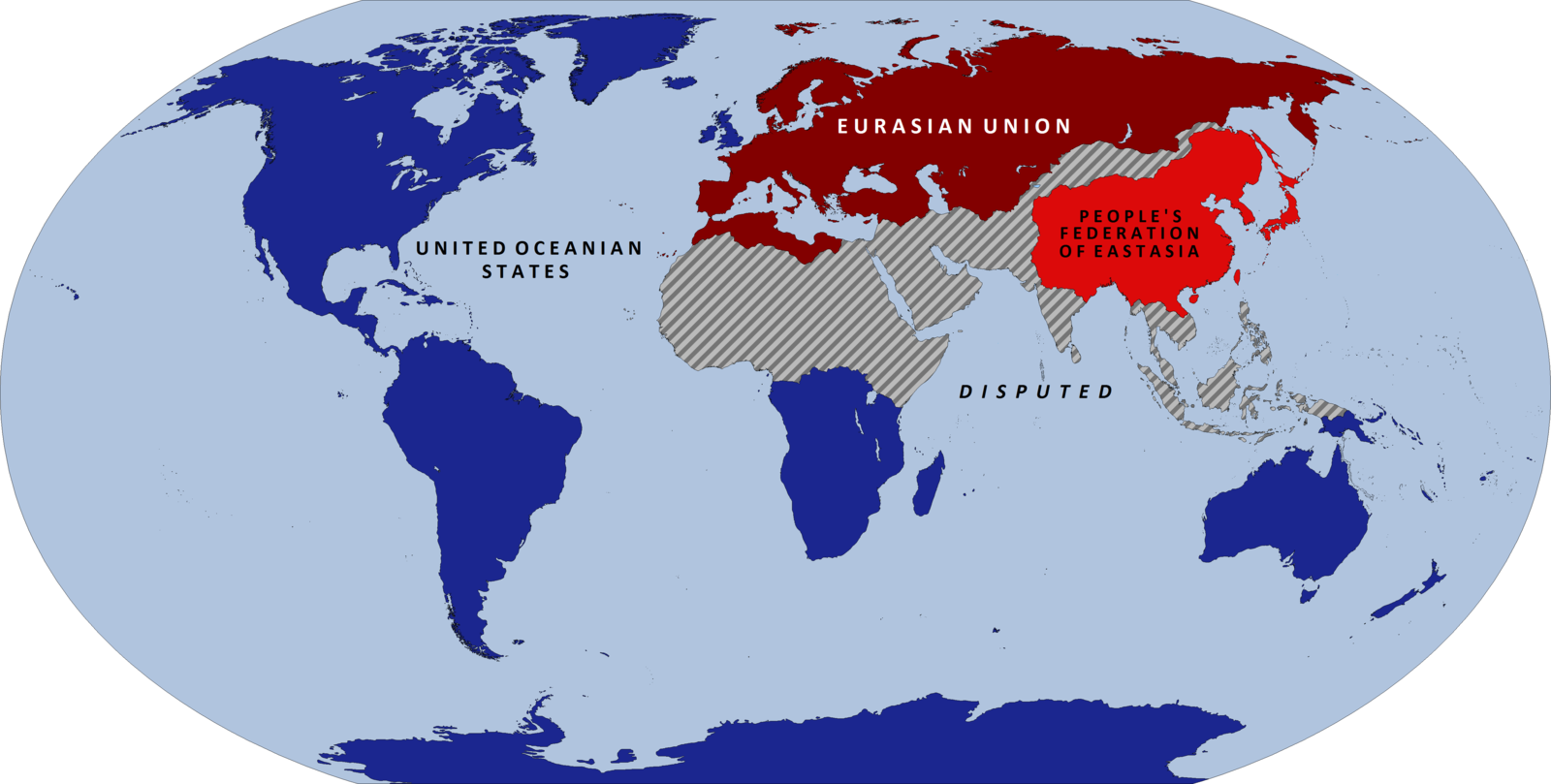
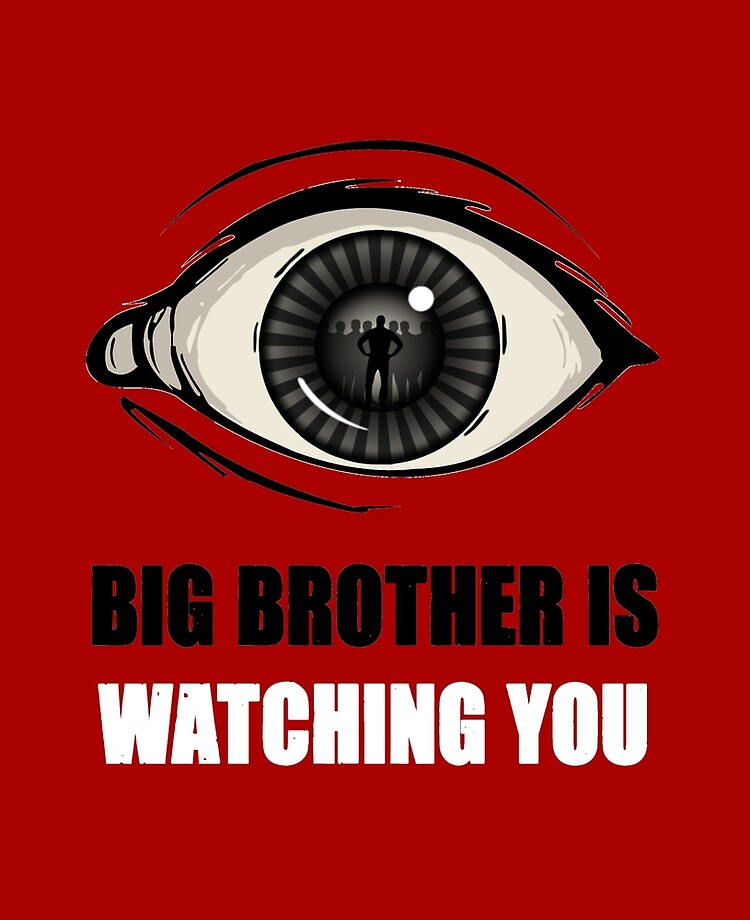
     Next we discussed the setting and how it contributes to the mood and tone of 1984. Setting is the time, place, physical details and circumstances in which a story occurs. They include the background, atmosphere, or environment in which characters live and move. The setting in 1984 is important because it provides an incentive for the majority of Winston's thoughts and actions. The setting is dominated by the watchful eye of Big Brother, who seeks to destroy anyone who might pose the slightest threat to INGSOC. This drives Winston to rebel in the best way he can, by writing down his independent thoughts and memories in a journal as well as resisting the overarching influence of Big Brother which seeks to control everything in its reach. The greater setting of the world of 1984 also plays a significant role. The three nations are in a state of perpetual warfare with constantly shifting alliances. The government uses this to appeal to the people’s patriotism and hate towards others in order to better control them. Winston is the only one who can see past these lies and retain his own individuality separate from the mold of the state.

     We learned a new vocabulary word, palimpsest, and it is a manuscript or piece of writing material on which the original writing has been effaced to make room for later writing but of which traces remain. The government in 1984 used palimpsests heavily in order to rewrite any errors or transgressions from history, making them as if they never existed. Through this, the government is able to create truth out of lies, while reality disappears from the pages of history. This also presents us with a great irony from the book which is that Winston says he loves his job, yet he is changing the past in order to protect those whose he hates above all. This shows that though Winston is different from the other people in Oceania, in some critical respects he is just like them as well.
     As we drew to a close we had a brief discussion about Syme, and used the passage where he talks excitedly about the New Dictionary he is making. Syme also presents the reader with irony as he describes the elimination of words as beautiful and says that he is so excited to see when Newspeak will be condensed even further eliminating what he refers to as useless words. However, the irony in this statement is that once Newspeak does eliminate all of the words that allow people to adequately express themselves, the adjectives that he energetically uses to describe his passion of destroying words, will be destroyed as well.
    The last slide of the lesson was a discussion about the dark-haired girl. I believe that she is someone who thinks similarly to Winston and perhaps is frequently around him because she wants to speak to him, but is frightened the same way that he is of the government’s watchfulness. Winston however, differs from my view and thinks that she is a spy looking to gather information on him in order to hand him over to the Thought Police. I however think this is highly unlikely because if she really were a spy, with all the materials at their disposal, Winston would have been long gone by now.

     At first, the transition to remote learning was a hard adjustment as I missed the face to face interactions I had with my teachers and peers. Furthermore after some time, I found myself losing some motivation to complete assignments. However, I realized that regardless of the situation education is still one of the most vital things in life and so I strived forward and continued to work hard. As the year draws to a close it is incredible to think that we will be in remote learning for over three months but ultimately we all made it through together. Our teachers and administration were understanding, while our fellow peers picked us up when we needed help and carried us through this tough time. As the summer approaches the temptation to forget about the virus and enjoy the fresh air and warmth is undoubtedly there, yet we must not forget that this is a very real and present threat. As the coronavirus death toll in the United States surpasses 100,000, this grim milestone must serve as a reminder to all of us that in order to ensure the safety of our fellow countrymen, we must continue to follow government regulations for a while longer. If not, the effects of our actions may have irreversible negative consequences. 

Reflection 

     In this lesson we learned how setting influences the mood and tone in literature by applying it to the novel 1984. The setting is what drives the conflict in 1984 between Winston and the oppressive regime of Oceania. Every aspect of life is meticulously controlled by the state with individual thought seen as dangerous and threatening. Winston however is different from most others and he clings on to memories of a distant past where things were different. The perpetual warfare between the three nations is advantageous to INGSOC as they can appeal to the people’s feelings of fear and hatred in order to control them, and the watchful eye of Big Brother along with the Thought Police keeps the populace in check, snuffing out the slightest form of dissent. Ultimately this creates a pessimistic mood and tone. The reader understands that there is no hope for Winston in this totalitarian world, while Winston has given up on the possibility of change, accepting his own death at the hands of the regime that strives to control him. We learned this because oftentimes the setting can be overlooked when analyzing what causes events within a story. Other elements like theme or conflict can take center stage, while the setting is seen as a secondary aspect. However, as was revealed by our lesson, the setting oftentimes is the overarching element that allows for everything to occur within a book. For example, if it wasn’t for the oppressive society, the story of 1984 could not exist as this is what drives Winston to act the way that he does. Applying this idea to mood and tone from the very first pages of the book, the city of Airstrip 1 is described as a bleak and ominous metropolis where no meaningful relationships exist and every move is meticulously observed. Through these descriptions the reader develops a pessimistic mood as described above and we better understand Winston’s pessimistic tone by visualizing the setting in which he lives. I can use what I learned by applying the principle that the setting contributes to mood and tone to other works of literature. In 1984 the reader’s mood is the same as Winston’s tone yet this is not always the case. In the novel Animal Farm the reader’s mood is one of pity towards the farm animal’s plight, such as when Boxer is sent to the knacker. This differs from the tone of the two sides of animals on the farm. The farm animals live in a constant state of uncertainty, fear, and oppression while the pigs are ambitious and cunning in gaining a profit off of the other animal’s backs. The reader’s mood and the two tones are all made possible by the strict and totalitarian conditions imposed on the farm once Napoleon’s regime takes over.

Jason Jiang- Blog #46- Period 2- 5/28/20

Aim: How is the theme,"the importance of having knowledge about the past
in order to understand the future" exemplified/elucidated Through  Winston’s time in the Prole District?

Do Now:  
What are some of the “lies/stories” parents tell their children?
Some of the “lies and stories” parents tell their children include 
  • Problems and their every day struggles 
  • Easter Bunny 
  • Santa Claus, Tooth 

Why do you believe they tell these stories, rather than the truth?
  • They tell these stories rather than to tell the truth because they do not want their children to know things. Parents might think that their children are too small and little for adult life, therefore, they do not want their kids to know about their problems. 
  • Parents sometimes also tell children stories about Santa Claus and tooth fairy to make them happy and comfortable so that they are easier to control and manipulate. 
What might be a history “lie/story” a school has taught/told you?
  • One history lie and story that a school has taught us is the story of thanksgiving and the story of Christopher Columbus. The arrival of the people for thanksgiving killed many Native Americans as the Europeans brought many diseases to Virginia. As for Christopher Columbus, people forgot that he killed and conquered a lot of Native Americans while he settled in America. 

Today we began the actual lesson by reading “The First Thanksgiving: 
After reading we answered the question 
How was history manipulate in this story 
  • History was manipulated in this story because we all grew up to believe that the first thanksgiving was a good time of unity and diversity while the actual thanksgiving caused many deaths. 
How does this correlate to 1984
Everything was depicted as the past being horrible and the present being prosperous in 1984. This is similar to Thanksgiving as we all grew up to believe that the first thanksgiving was a time of happiness and fun. 

Then we proceeded to do the discussion
“In the end the Party would announce that two and two made five, and you would have to believe it.”
Analyze Winston’s statement above. How do you explain his example? What are your thoughts on the matter?
  • This means that the people are forced to believe everything that the government says. Therefore, causing the people to be brainwashed. I think that the society is really corrupt as it shows that only one specific group of people, the government, has a lot of power and is able to manipulate the people in the story.
What do you think the author’s intention or purpose is for the reader to have as a takeaway about the world you/we live in?
  • The author wants us to question the authority in the world that we are living by. He doesn’t want us to go about our day blinded 
Group Work: 
Winston is clearly on a quest for the truth from the past. He states, “If there’s hope, it lies in the proles” (Winston,pg. 69).
  • Work together to assess if Winston is correct. Consider the different age groups.
  • If he is/isn’t explaining how things would unfold for successor failure to occur. Consider the government’s role in all of this as well.
  • Are there specific actions or events that need to occur to guarantee success/failure? If so, what?
I think that it is uncertain in believing that if there is hope for a better society, then it lies in the proles because the proles are the only people who weren't brainwashed by society. Therefore, they still have common sense into believing what is wrong and what is right. However, considering that they are not as intelligent, they will need a long time to rebel. I think that the old people in the proles will have a better chance helping Winston considering that they still might have remembered the experience before the rise of the society. Despite this, many of the old people do not want to interfere with the government because they do not care. One specific action that needs to occur to guarantee success is a riot or revolution. A revolution will open the people's eyes because it shows that the government is not as strong and powerful as they seem. 

WHOLE CLASS DISCUSSION

What do you make of Winston (unconsciously) finding himself back at the very junk shop where  he bought the Diary?
  • The junk shop shows a sense of symbolism to Winston  
Why does he appear to be so drawn to the paperweight?
  • The paperweight is something that connects to the time before the past causing a connection to Winston’s search for information to the past. 
What are your opinions of the room, which has no telescreen?
  • The room with no telescreen shows that some people still have conscience. Additionally, the room with no telescreen shows a sign of freedom as it shows protection from Big Brother and the society. 
 Why do you suppose he decides he will continue to return to the shop, despite the risks? Foreshadowing?
  • I think that he will continue to return to the shop because it shows that he seeks this idea of freedom. He finds himself unconscious and lured into going into the room, showing that he still has this desire to have freedom. It shows foreshadowing as it shows that the government might arrest the main character considering his guilty quest and actions and this repetition of going to the junk store that consists of an illegally no camera room. 
Blogger Content
  • Write about your thoughts regarding the reading.
While reading the passage, I feel sympathy towards the people living in the society because they are controlled by the government who have absolute control over their people, while manipulating and overpowering them. Specifically, I feel sympathy towards Wilson because it feels as if the could do nothing regarding the government despite his efforts to seek information. 
  • What is it like working from home?
Working at home has been an ease. I get ot finish work earlier and I do not worry about hte time I go to bed considering that I dont have to wak up at 6 am every morning to get on a bus and travel to school. 
  • Your own personal feelings and thoughts about what is happening right now.
  • I think that what is happening right now acts as an eyeopener ot the world. It shows us that we could not ignore the signs and significance of little things because how we handle these messages will affect the overall future. If we had handled the outbreak of the coronavirus in the US properly, there wouldn’t have been so much negativity. If we had precautions and laws regarding distancing and if we have shut down public gatherings as soon as corona hit the U.S., we could have still been at school right now. 


Reflection:

In this lesson, I learned the importance of the idea of knowing what is exactly going on in the world and in the nation that we are living in. As opposed to the society in which the main character in 1984 lived in, we have the ability to question authority because we have the right shtat prevent the government from having too much power over their people. We are reading 1984 and learning about this topic because by doing this it enables us to always keep our eyes open for the government as we work to prevent the government from being too powerful. We could use this in our everyday lives because we will always keep our eyes and minds open for any possible signs of superiority from the government. Additionally, by learning this encourages us to exercise our rights of speech as we could advocate the things that we do not believe in such as racism.

Blog #45 -Eric Huang -Period 2 -5/28/20

Aim: How is the theme, "the importance of having knowledge about the past in order to understand the future" exemplified/elucidated through Winston’s time in the Prole District?
Do Now: 
  1. What are some of the “lies/stories” parents tell their children?
    1. Santa Claus
    2. Tooth Fairy
  2. Why do you believe they tell these stories, rather than the truth?
    1. To make life more fun
    2. To control kids
  3. What might be a history “lie/story” a school has taught/told you?
    1. Christopher Columbus and the first Thanksgiving

Group Discussion 
  1. Analyze Winston’s statement above. How do you explain his example. What are your thoughts on the matter?
    1. The party has so much power that they can easily manipulate the people
  2. What do you think is the author’s intention of purpose is for the reader to have as a takeaway about the world you/we live in?
    1. It’s really comparable to current day’s society
      1. Shows how there are limited people in power at the top
    2. The author wants you to question authority
      1. Don’t blindly follow as the people in 1984 and Animal Farm
Group Work
  • Assess if Winston is correct in his statement “If there’s hope, it lies in the proles.”
    • Depends on the proles because they are all brainwashed already
      • If there is someone brave enough, then there can be a rebellion
    • The older age group might be more willing to rebel than the younger age group
      • The old people might still have some memories of life before the revolution
  • How would things unfold for success/failure to occur.
    • The government would have to fall
  • Are there specific actions or events that need to occur to guarantee success/failure? If so, what?
    • Revolution 

Whole Class Discussion
  • What do you make of Winston (unconsciously) finding himself back at the very junk shop where he bought the diary?
    • He is already becoming rebellious against the Party
  • Why does he appear to be so drawn to the paperweight?
    • It stands out to him
    • It’s something from before the revolution 
    • He’s on a quest to the past
  • What are your opinions of the room, which has no telescreen?
    • It’s a protection against the government’s eyes
  • Why do you suppose he decides he will continue to return to the shop, despite the risks? Foreshadowing?
    • Bad consequences

Write about what you learned in your online English lessons.
During my online English classes, I’ve been able to learn about different views of the story. For example, I might have read the book and understood one thing, but my classmate might have read it and had a different understanding of it.

What is it like working from home?
Working from home is a lot more relaxed than being in class physically. At home, eating and sleeping schedules are a lot more flexible. There’s also a lot less schoolwork and little to no tests. 

What are the updates around the world/community regarding the virus?
The death toll in the United States just reached 100,000, which is a horrifying number to hit. In New York, the daily death toll has slowly gone down. In April, it was at its highest around 800 deaths per day. Currently, it’s dropped to around 100-200 the past few days.

Reflection
What did I learn?
I learned that the paperweight not only stood out to him, but it also symbolizes him wanting to go back to the past before the revolution.
Why did I learn it?
I learned it so I can see another classmate’s understanding of the book. When I read it, I didn’t realize that, but now, I see a different point of view.
How will I use what I learned?

I can try to make more connections like this and try to find other things that may be symbols.